
10 Ways to Plan an Outdoor Living Space That Actually Gets Used

You step outside, but head back in.
Your outdoor space is there, but it’s not someplace you find yourself staying for very long. It’s not quite comfortable, or not set up for how you actually want to spend time.
Maybe you use it occasionally, but it doesn’t naturally become part of your day. It’s easier to relax inside than outside.
That gap isn’t usually about size. It comes down to how the space is planned and whether the layout supports how you actually want to live.
If you’re trying to create a space you’ll use consistently, these are the planning decisions that make the biggest difference.
1. Start With One Primary Use (Not Everything)
When planning a backyard renovation or new outdoor living space, it helps to focus on how you primarily want to use the space rather than listing out specific features.
Many spaces become underused because they try to do too much.
Instead of designing for every possible activity, choose one primary use as an anchor and build around that. Secondary features can support it, but they shouldn’t compete with it.
Think about what you find yourself doing at home and what you wish could happen outside more easily.
This might include:
Spending time with family
Hosting small groups
Eating outside more regularly
Having a calm place to relax at the end of the day
Creating space for kids to be active
Once your priority is clear, it becomes easier to shape the layout around it.
2. Create Clear “Zones” Instead of One Open Area
Once you’re clear on how you want to use your space, the next step is shaping a layout that supports those goals.
This is where many outdoor spaces fall short. The features might be there, but they aren’t arranged in a way that feels natural.
A space tends to work best when:
Areas are clearly defined around intended use
Movement between them feels easy and uninterrupted
Each part has a clear role
That definition doesn’t always come from hard edges. Changes in surface, subtle shifts in elevation, or surrounding landscaping can help shape different areas without making the space feel segmented.
Once those roles are clear, it becomes easier to create defined areas that work together, such as:
A primary seating area for relaxing
A place for dining or gathering
Additional features like a fire pit or outdoor kitchen
When each area has enough room and connects naturally to the others, the space starts to feel more intuitive and easier to use day to day.
3. Keep Your Most-Used Area Closest to the Door
One of the most important factors is how the outdoor space relates to the home itself.
Questions to consider:
Where do people naturally step outside?
Does the layout flow easily from the house into the yard?
Is there a clear path or does it feel disconnected?
The spaces you use the most should be the easiest to access.
If your main seating or dining area is too far from the house, you’re less likely to use it regularly. Convenience plays a bigger role in how often the space gets used than people expect.
A strong connection to the home makes the outdoor area feel like an extension of everyday living.
4. Give Each Area More Space Than You Think It Needs
Crowded layouts are one of the biggest reasons spaces don’t work.
Trying to fit too many features into a limited footprint makes everything feel tighter and less comfortable.
Giving each area enough room to function makes a bigger impact than adding more elements.
5. Make Movement Between Areas Feel Obvious
You shouldn’t have to think about how to walk through the space.
There should be a natural path between key areas without cutting through seating or navigating around obstacles.
If movement feels awkward, the entire space becomes less usable.
6. Place Features Where They Actually Support Use
Features only work if they’re in the right place:
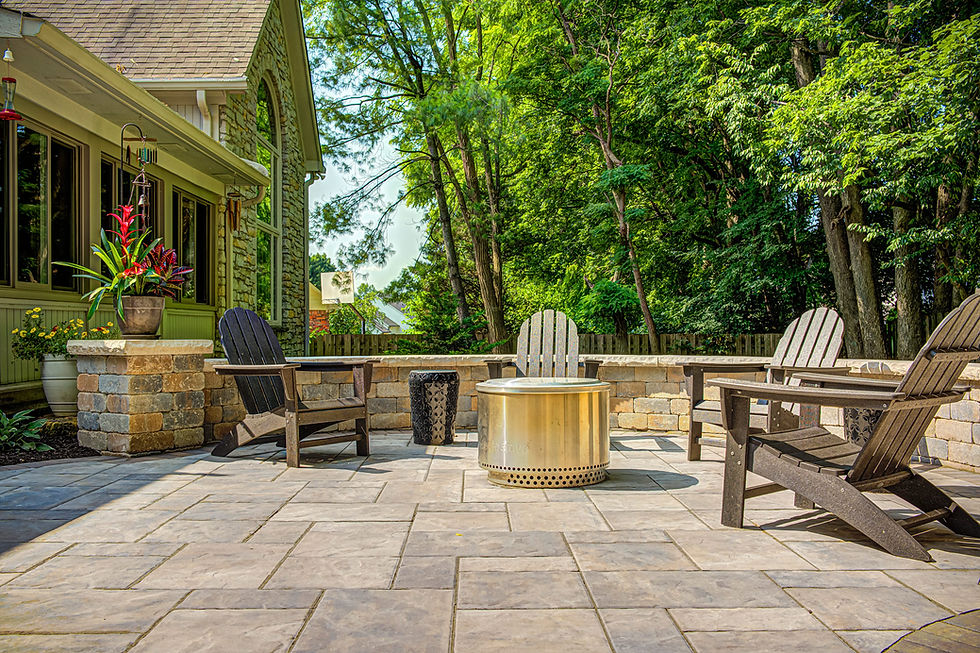
A fire pit should feel integrated into a seating area.
A dining space should be positioned for easy access from the house.
An outdoor kitchen should connect logically to how you’ll use it.
Placement matters more than the feature itself, especially when you’re creating a space intended to be used regularly.
7. Don’t Line Everything Up Against the Edges
A common instinct is to push furniture and features to the perimeter to keep the center open.
That often makes the space feel less inviting and more like something to walk through than somewhere to stay. It can also make seating areas feel disconnected from each other.
Instead, bring key elements inward so they feel anchored and intentional.
When areas are centered around how people gather, the space becomes much more comfortable to spend time in.
8. Plan for Shade, Light, and Time of Day
A space that looks good at noon might not work in the evening.
Think about when you’ll actually use the space and how sun, shade, and lighting will affect it throughout the day. If seating is fully exposed during the hottest part of the day, or if there’s no lighting in the evening, people are less likely to stay outside.
Planning for these conditions early helps ensure the space feels comfortable across different times, not just in ideal conditions.
9. Prioritize Comfort
A space that looks good but isn’t comfortable won’t get used consistently.
Comfort comes from more than just furniture. It’s influenced by spacing, how enclosed or exposed the area feels, and whether people can settle in without adjusting or moving things around.
Visual design matters, but comfort is what determines whether people stay or head back inside.
10. Make It Feel Like an Extension of the House
The outdoor space should feel connected to daily life inside.
That connection comes from how the layout aligns with doors, sightlines, and the natural flow of movement from the home. If the space feels separate or requires extra effort to access, it’s less likely to be used regularly.
When it feels like a natural continuation of the house, the transition becomes seamless, and the space starts to feel like part of your everyday routine.
___
Planning an outdoor space that actually gets used comes down to understanding how it needs to function day to day.
At Oasis Outdoor Living & Landscapes, that’s where the process starts. Each project is approached by looking at how the space connects to the home, how it will be used, and what will make it feel natural to spend time there from the start.
Because design and construction are handled together, those decisions stay aligned from the beginning—whether that involves reworking the layout, building a new paver patio, or shaping the surrounding landscape. The result is a space that feels cohesive, works the way it should, and fits both the home and the people using it.
If you’re thinking about improving your outdoor space, you can get in touch to start the conversation.


Comments